Journal and Reflections

Personal Witness in the Unravelling

About This Space

Reflections on the spiritual journey — the struggle for fidelity, the work of conversion, and the grace that sustains.

Journal and Reflections is where theology becomes personal, where doctrine meets lived experience, and where the insights explored across the other categories are tested in the crucible of daily life. My writings here are not formal treatises but personal reflections: on prayer and dryness, on temptation and grace, on the difficulty of living faithfully in a culture hostile to truth, and on the slow work of conversion.

Faith is not just intellectual assent to propositions. It is a lived relationship with the living God, and that relationship unfolds over time, through trial, through failure, through repentance and renewed commitment. These essays are vulnerable in ways my work in the other categories is not, not because vulnerability is a virtue, but because honesty about the spiritual life requires admitting what academic theology often omits.: that knowing the truth and living it are not the same, that sanctification is slow and painful, and that grace is not required once, but daily.

Entries in this category may reflect on:

  • The challenge of perseverance when prayer feels empty
  • The temptation to despair in the face of cultural collapse
  • The slow, unglamorous work of mortifying habitual sin
  • The experience of God’s mercy after repeated failure
  • The consolations and desolations of spiritual life
  • The integration of theological insight into daily life
  • Reflections on feast days, seasons, and the liturgical calendar

This is not a private diary made public. It is personal witness offered for the encouragement of others who walk the same path. The goal is not self-expression but edification: to show that the Christian life is both harder and more beautiful than triumph or despair would suggest. It is a fight sustained by grace, and the outcome is certain.

He who began a good work in you will bring to completion at the day of Jesus Christ. (Philippians 1:6)

If you’re walking through darkness, questioning your faith, or simply trying to make sense of loss — this space is for you. Read what resonates. Leave what doesn’t. And know you’re not alone on this road.

Conversion As Ongoing Work

The Long Obedience in the Same Direction

Conversion is not a single event. It is the daily turning from self towards God, the repeated choice to die to sin and live to righteousness. The first conversion — the moment of surrender, of “yes” to Christ — is crucial. But it is not the end. It is the beginning of a long obedience in the same direction.

These reflecting trace my ongoing work: the slow mortification of pride, the gradual surrender of control, the painful recognition of disordered loves. Conversion is not a dramatic montage; it is years of small, unglamorous choices to pray when you don’t feel like it, to resist temptation when no one is watching, to forgive when bitterness feels justified. It is the work of becoming who you already are in Christ — and that work continues until death.

Consolation and Desolation

The Rhythms of the Spiritual Life

St Ignatius of Loyola teaches that the spiritual life moves through rhythyms of consolation and desolation. Consolation is when God feels near, prayer is sweet, and the path seems clear. Desolation is when God seems absent, prayer feels empty, and doubt intrudes. Both are normal and both serve purposes.

These reflections examine what it means to persevere through desolations — to continue praying when God seems silent, to continue choosing virtue when it brings no felt satisfaction, to trust that God is at work when the evidence is invisible. They also explore the temptations that come with consolation: to mistake feeling for substance, to become complacent, to forget that spirituals highs are gifts, not achievements. The goal is not to chase consolation but to remain faithful in both seasons.

Living Faithfully In Babylon

The Challenge of Cultural Exile

To be a faithful Christian in the modern West is to live in a kind of exile. We dwell in Babylon: a culture that is not merely indifferent to Christianity but increasingly hostile, a culture that labels virtue as bigotry and calls sin liberation. The challenge is not merely to resist but to remain rooted, to build households of faith, to raise children in the knowledge of God while surround by forces intent on their corruption.

These reflections explore what it means to be in but not of the world: to engage culture prophetically without becoming embittered, to love neighbour without compromising truth, to seek the welfare of the city while recognising that our citizenship is in heaven. The spiritual life is not private piety — it is the formation of a people who live as signs of contradiction, as witnesses to a Kingdom that Babylon cannot comprehend and will not tolerate. And yet we persevere, “as sorrowful, yet always rejoicing; as poor, yet making many rich; as having nothing, yet possessing everything” (2 Corinthians 6:10).

This category is not a demonstration of my virtue. They are accounts of the struggle toward it — the kind that includes failure, repetition, and the slow grinding work of mortification that nobody posts about and everybody needs to do.

I write personally here not because vulnerability is a value in itself, but because the sanitised version of the Christian life is a lie that harms people. When formation is presented as triumphant and linear, those who experience it as circular and humiliating conclude that there is something wrong with them. Usually something is wrong with all of us — and that is precisely the point. Grace is for sinners, not for the spiritually competent.

I am a lay theologian, not a spiritual director. I do not write these reflections as instruction but as witness: this is what the theology looks like when it meets an actual life, with its attendant mediocrity, its recurring sins, its dry periods of prayer, and its unexpected moments of grace.

He who began a good work in you will bring it to completion. I am counting on this more than I can say.

FROM THE DEPTHS

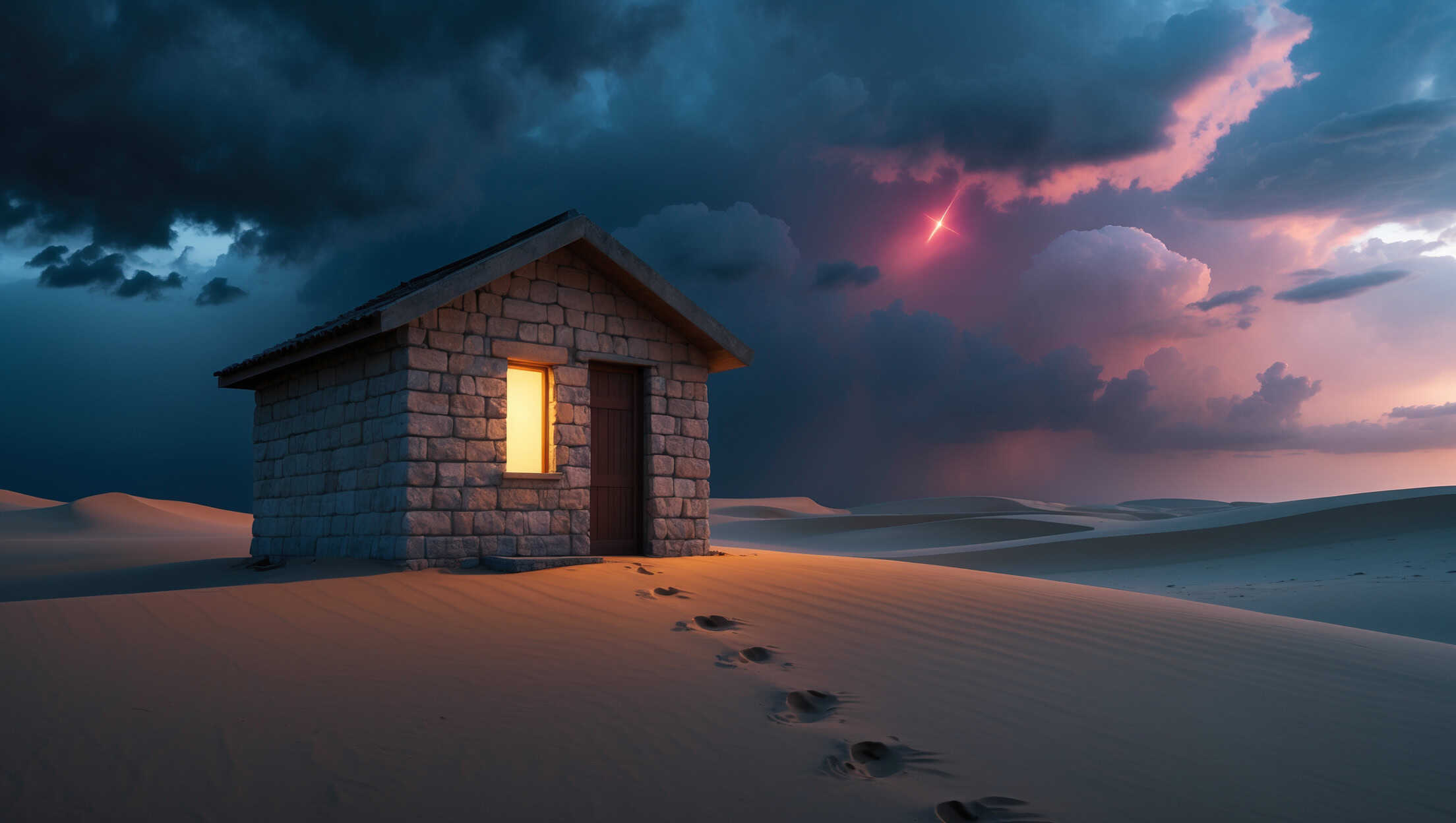
Stone house on sand dunes at dusk, symbol of building life on false philosophies and ideologies.

Recent Entries

Six Months In

Six Months In

Not everything you set out to accomplish this year has come true. It’s been far more difficult than you imagined. But if there is one thing you learned through the trials of 2026, it’s that you can survive and thrive through almost anything.

read more
Letter From My Future Self

Letter From My Future Self

A meditation on healing through surrender. How grief, properly carried to the foot of the Cross, becomes the doorway to peace — and how the future we fear might be the gift God intends.

read more
// Defer GTM until after page load add_action( 'wp_head', function() { ?>